
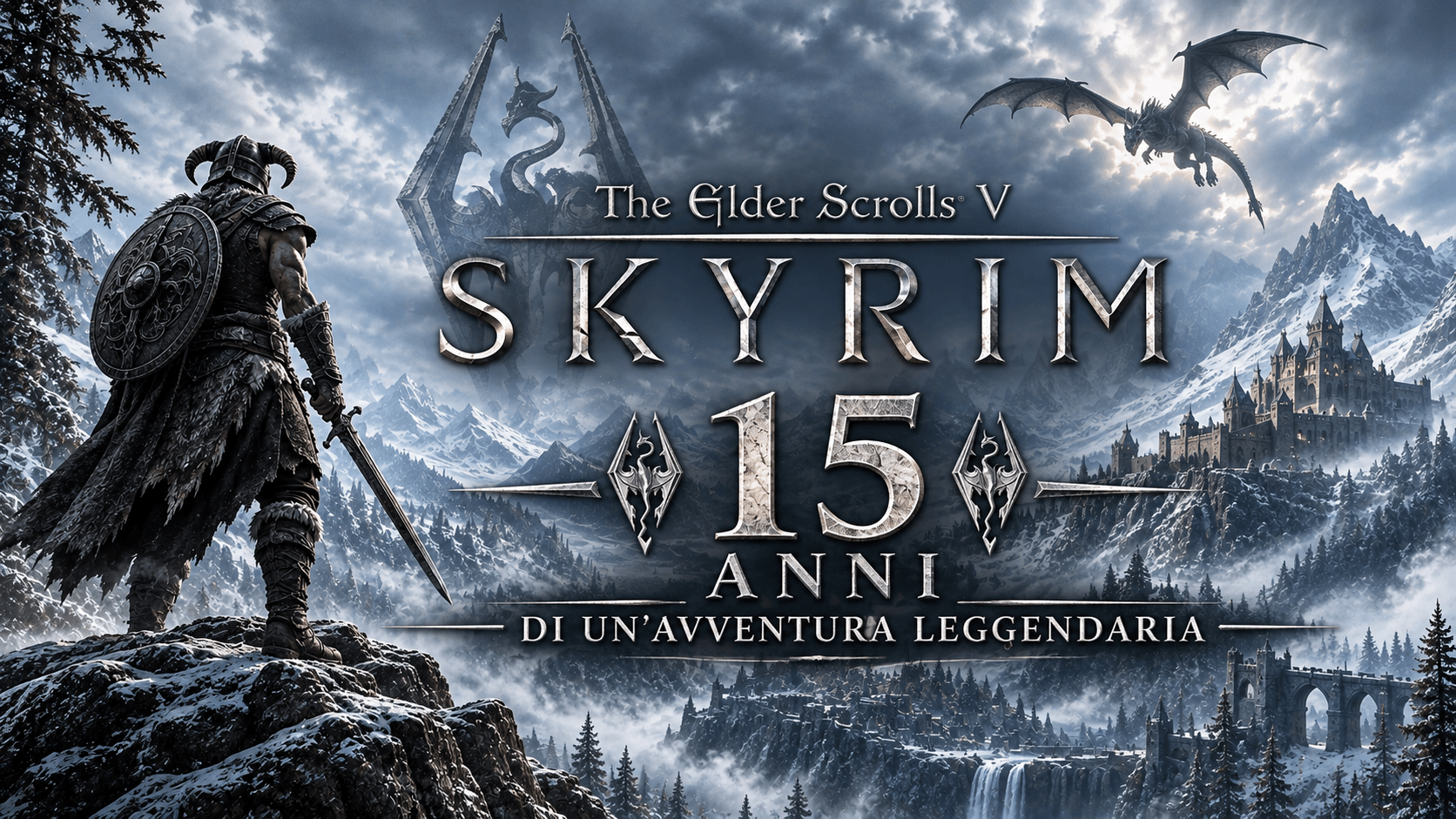
The Elder Scrolls V: Skyrim: why is it still so beloved after 15 years?
by Cristian Mazzini
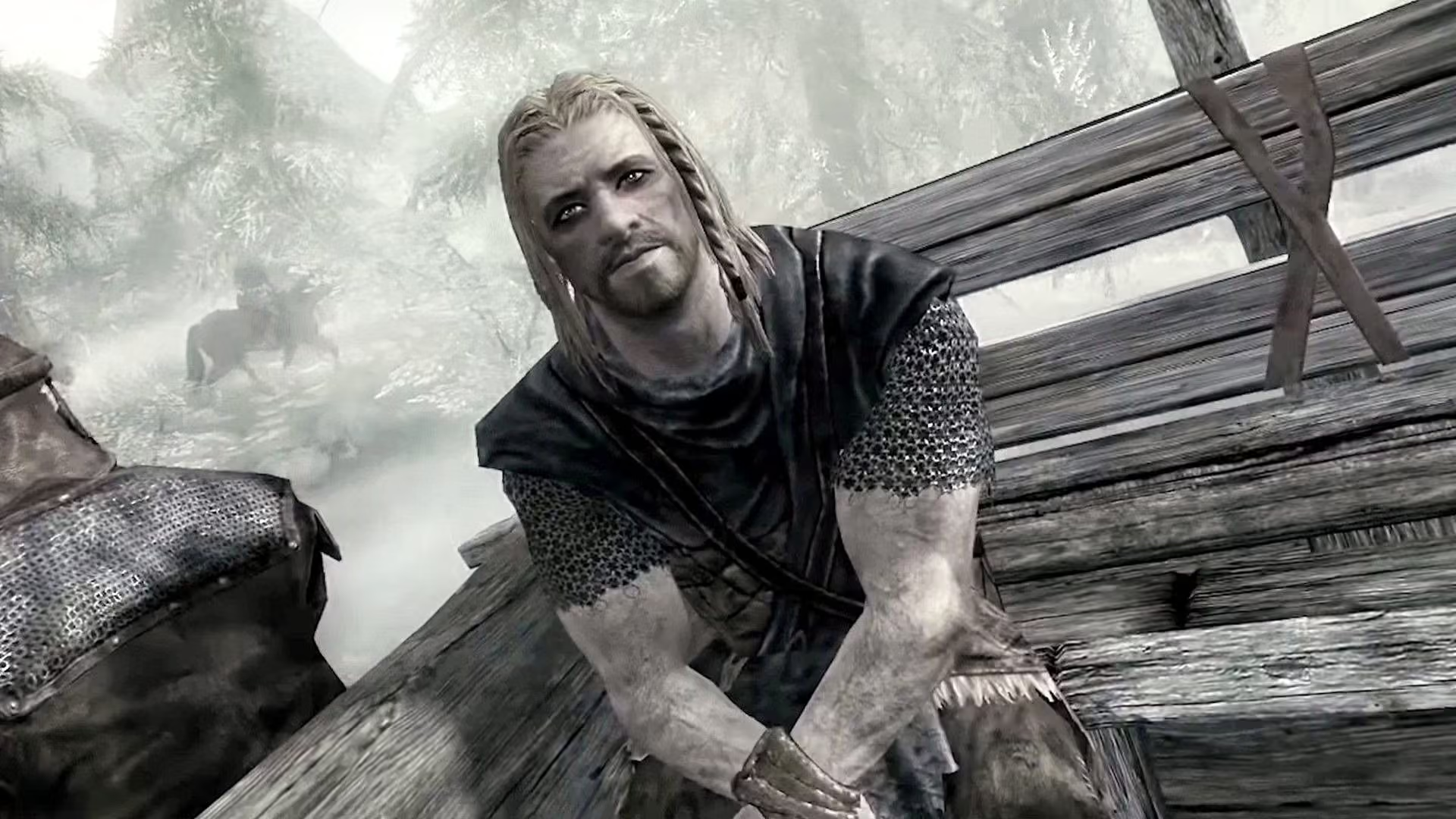
Today is November 11, 2026—exactly 15 years since the release of *The Elder Scrolls V: Skyrim*.
Yesterday, partly for this reason and partly out of nostalgia, I re-downloaded the game on Steam and played through the prologue again… I found myself just as captivated as I was the first time.
It made me wonder: how is it possible that, even now—15 years later—we are still talking about it, debating it, playing it, modding it, and living within it?
Released in November 2011, and now reaching its fifteenth anniversary, Bethesda’s masterpiece remains one of the most beloved and discussed role-playing games of all time—and it is still widely played today.
But why? How does a game that inevitably shows its age manage to retain such a powerful allure?
The answer isn't found solely in its freedom, the sheer volume of content, or its vast, explorable world. *Skyrim* transcends the typical gaming experience: it is a place to return to, an adventure that each person can shape in their own way, and—for many players—a true digital home.
For me, *Skyrim* is all of these things. And perhaps this is the best place to start if we want to understand why, after fifteen years, its pull remains so incredibly strong.
A soundtrack that gets into your soul
Some soundtracks merely accompany a video game, while others become an inseparable part of it. The score composed by Jeremy Soule for *Skyrim* is melancholic and soothing; it touches the heart, and even today, I often find myself listening to it while driving.
The opening notes of "Dragonborn" are enough to transport you straight back to Tamriel, conjuring images of snow-capped mountains and memories of the first time you set foot in the lands of *Skyrim*. Yet, in my view, the true magic of the soundtrack reveals itself most profoundly during quieter moments—when there are no battles to fight and no urgent quests to complete.
"Far Horizons," "From Past to Present," and "Secunda" are perfect examples of this. These tracks don’t need a spectacular event to stir the emotions; they can make even a simple stroll, a pause by a lake, or a night spent under a starry sky feel truly special.
Soule’s music does more than just highlight the beauty of the landscape—it gives it a soul. It transforms a snowy expanse into something melancholic, a forest into a place of mystery, and a mountain sunset into a moment you wish you could hold onto forever.
It is a soundtrack that manages to be epic without being constantly intrusive, melancholic without becoming depressing, and soothing without ever feeling generic. Above all, it leaves room for silence and the ambient sounds of the world, allowing the atmosphere to breathe.
Personally, I’ve lost count of how many times I’ve stopped just to look around, enchanted and captivated by the perfect harmony between the music and the landscape.
I believe this is one of the primary reasons why *Skyrim* is still capable of evoking such powerful emotions. It doesn’t matter how many times I’ve traveled those streets: when the right song starts playing, it’s as if I were returning home after a long time.
You aren’t just playing—you’re living in Skyrim.
"Immersion" is one of the most frequently used terms when discussing video games, yet explaining what it truly means is not always easy. In the case of *Skyrim*, for me, it means forgetting—even if just for a few hours—that I am sitting in front of a screen.
You don’t need to follow the main quest, save the world, or battle a dragon to feel like a part of that universe; sometimes, it’s enough to simply step out of an inn, set off toward a distant city, and see where the road leads. You might cross paths with a traveler, discover a hidden cave, witness a clash between two groups of enemies, or catch a glimpse of a structure in the distance that beckons you to explore it.
These are simple moments—often lacking any significant reward—that nonetheless make the journey feel authentic. The world doesn't seem to exist solely to facilitate the protagonist’s mission; it feels as though it has a life of its own, filled with places to uncover, characters to meet, and stories waiting for someone to listen.
Even small actions contribute to this sense of immersion: stepping into an inn while it snows outside, resting after a long trek, chatting with villagers, or pausing to take in a landscape. *Skyrim* gives weight to moments that, in other games, might serve merely as a breather between combat encounters.
That is why I don’t view it simply as an open world full of tasks to complete; it is a world where I can choose to embark on an adventure, or conversely, slow down, lose myself, and enjoy the journey without feeling constantly compelled to reach a specific goal.
This type of immersion doesn't necessarily stem from graphical realism or flawless animations—which, admittedly, are not the game's strongest suits. Rather, it arises from the game’s ability to make us forget, at least for a while, everything that exists beyond the screen. Even I—who usually tend to rush through a video game, as if to finish it as quickly as possible and move on to the next one—found that this was not the case at all here. I had the feeling that I was missing out on so much.
The freedom to be who we want to be
One of the most important aspects of Skyrim is freedom—not just the freedom to traverse a vast map, but, more importantly, the freedom to decide what kind of adventure you want to experience.
The game allows you to build your own character and develop them through your actions. You can become a warrior specializing in two-handed weapons, a silent assassin, a thief, an archer, a mage, or even combine entirely different approaches.
You can join factions, ignore certain narrative arcs, focus on exploration, or spend hours honing your skills.
Crucially, you are not merely a spectator to the story of a pre-defined protagonist. Your character is a figure you can shape, and your decisions help define the identity of your playthrough.
This marks a significant departure from many other adventures, where you step into the shoes of characters with established personalities, backstories, and goals. Geralt of Rivia from The Witcher, for instance, is a remarkable character—but he remains Geralt, regardless of how you choose to approach his adventures. In Skyrim, by contrast, you can imagine yourself as anyone: a warrior seeking glory, a thief living on the fringes of society, or a mage interested solely in the pursuit of knowledge.
Naturally, this freedom has its limits; narrative choices do not radically transform every single event, and many quests follow a set structure. Yet, for the sense of freedom to be effective, it is not necessary for every decision to have massive, far-reaching consequences.
The true strength of Skyrim lies in letting the player set their own priorities; you are not constantly prodded by a system dictating which task you ought to complete first.
It is precisely this ability to wander off the beaten path, change your mind, and craft your own personal adventure that makes every playthrough potentially unique. Skyrim does not merely ask you to follow a story—it empowers you to build one of your own.
A world that still has a desire to amaze
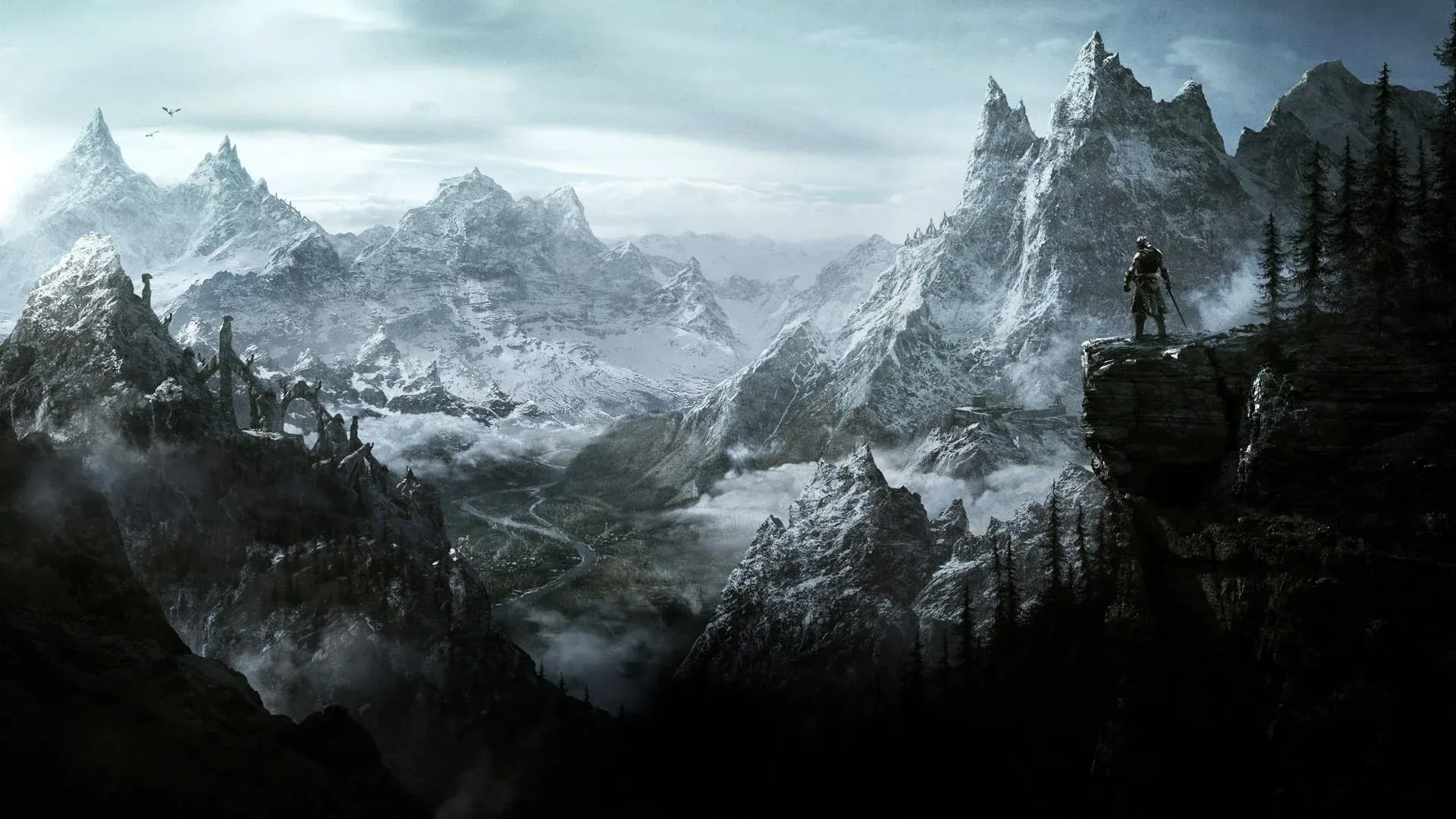
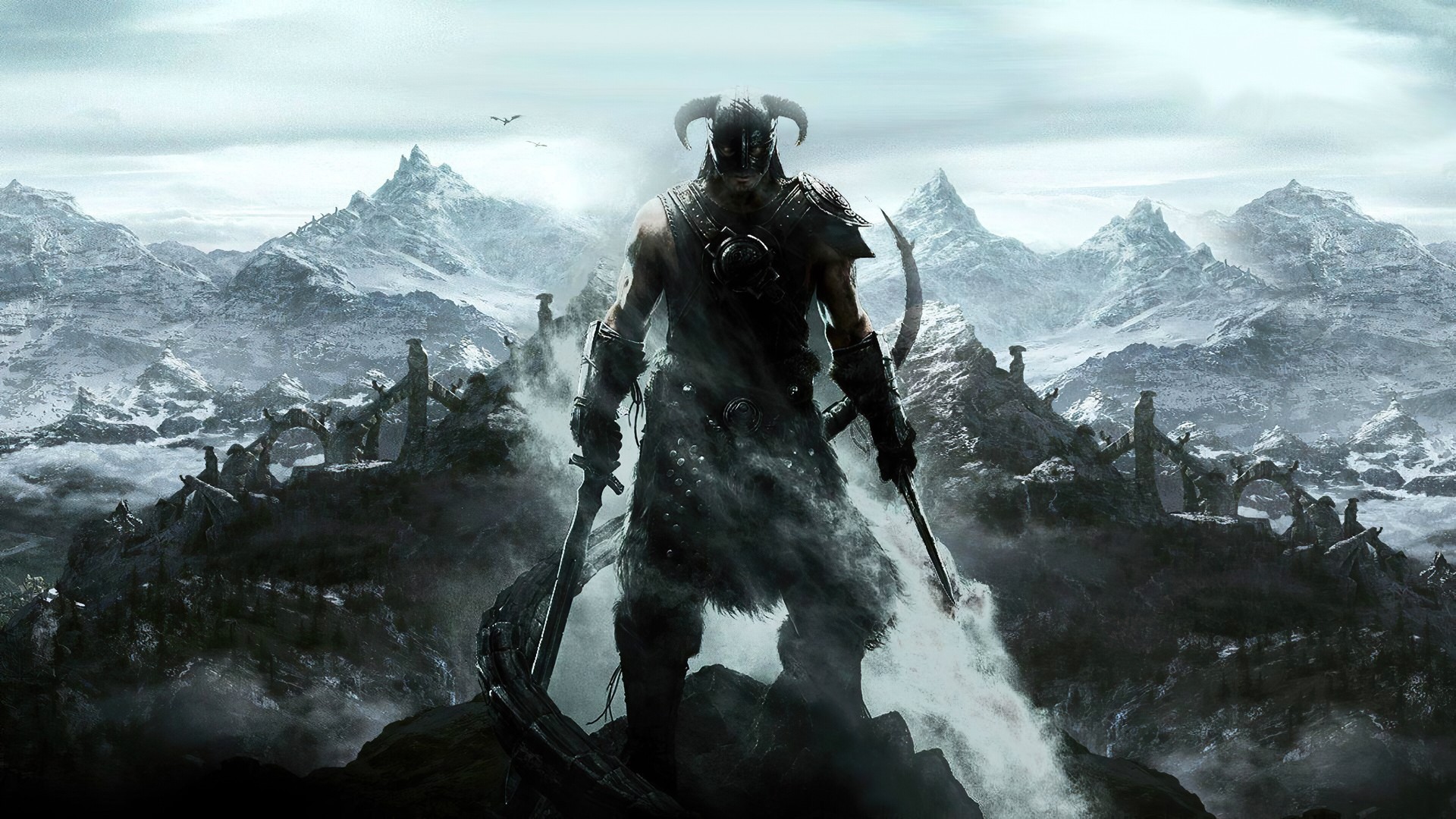
The map of Skyrim is one of its most iconic elements, but to define it solely by its size would be unfair; what makes the game world truly memorable is how its landscapes, architecture, climate, and music combine to forge a distinct, recognizable identity.
Snow-capped mountains, forests, plains, ancient ruins, and villages all tell the story of a fantasy universe that manages to be both hostile and welcoming.
Some locations evoke a sense of solitude, others seem to harbor long-forgotten secrets, and still others are so striking that one cannot help but pause simply to admire the view.
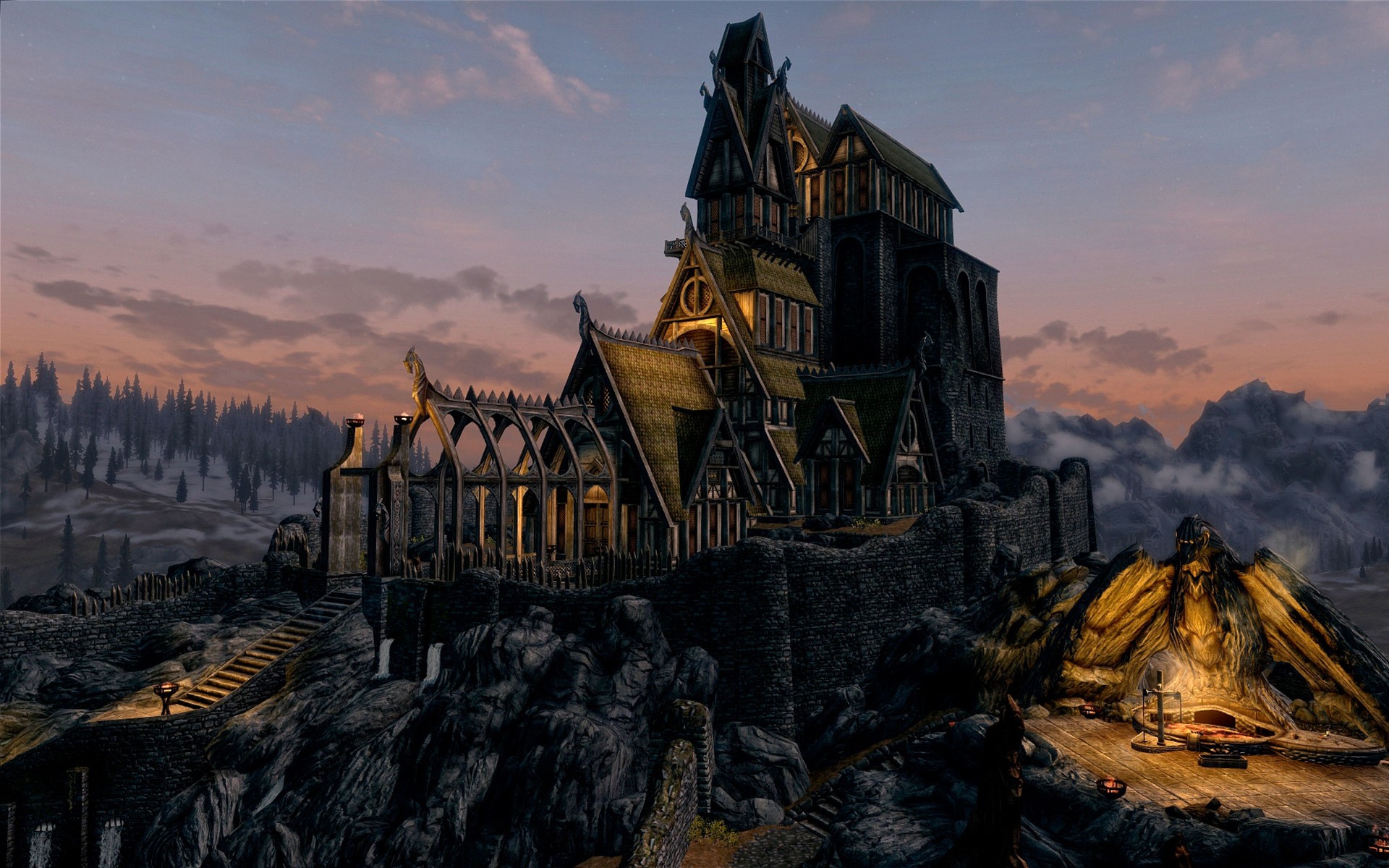
The cities, too, possess unique personalities. Whiterun—with its commanding position and instantly recognizable aesthetic—has become a symbol of the game. Solitude exudes a different kind of elegance, Windhelm carries a colder, harsher atmosphere, while Riften feels as though it’s hiding something around every corner.
Not everything is perfect: some areas can feel repetitive, and certain underground structures end up looking quite similar—as is to be expected from a game released in 2011—yet the world as a whole maintains an aesthetic and atmospheric consistency that remains effective even 15 years later.
Much of the credit goes to the art direction. Skyrim doesn’t need to push the absolute limits of detail to be evocative; often, a distant mountain, sunlight filtering through the trees, or snow blanketing a path is enough to create an image that lingers in the mind.
The beauty of it is that discovery doesn’t end with your first playthrough. Even after many hours, you might stumble upon a forgotten location, a cave you’ve never visited, or a detail you simply overlooked in previous sessions.
Skyrim constantly invites us to look beyond the horizon. And perhaps this is the very secret of a great open world: it shouldn’t just be large—it must also make us want to discover what lies beyond the next hill.
Side quests: stories that deserve to be experienced
When discussing role-playing games, it is easy to focus on the main plot, the key characters, and the events that lead to the adventure's conclusion. Skyrim, however, demonstrates that some of the most memorable stories can be found far off the beaten path.
Side quests are a fundamental part of the game’s identity—not least because they rarely boil down to simple errands completed for gold or experience. Some introduce compelling characters, others recount personal tragedies, and still others lead to unpredictable or unsettling situations, often with substantial rewards.
Faction questlines—such as those of the Dark Brotherhood or the Thieves Guild—further illustrate the depth the world of Skyrim offers beyond the Dragonborn’s primary mission.
For many, myself included, certain side quests are far superior to the main storyline, which, while well-crafted and engaging, can feel rather pedestrian.
Naturally, not every quest reaches the same level of quality. Some are brief, others are predictable, and some rely on familiar, repetitive structures. Yet, it is the overall variety that truly matters: players can shift from a mystery to a personal drama, or from a political conflict to an expedition into an ancient ruin, without ever feeling as though they are simply repeating the same adventure.
Often, we do not go looking for a story; the story finds us while we are busy doing something else. It has frequently happened that, while wandering through a city, a messenger has approached me with an unexpected—and often extraordinary—task.
This design philosophy makes exploration far more compelling; a cave is not merely a location filled with enemies and treasure—it might also harbor a tale, a secret, or an event capable of taking us completely by surprise. A person you encounter on the street is not necessarily just a piece of background scenery: they might open the door to an adventure you hadn’t foreseen.
The result is a world in which taking a detour doesn’t feel like a waste of time. On the contrary, it is often these very deviations that provide the most wonderful memories.
An imperfect game, but one with an inimitable soul
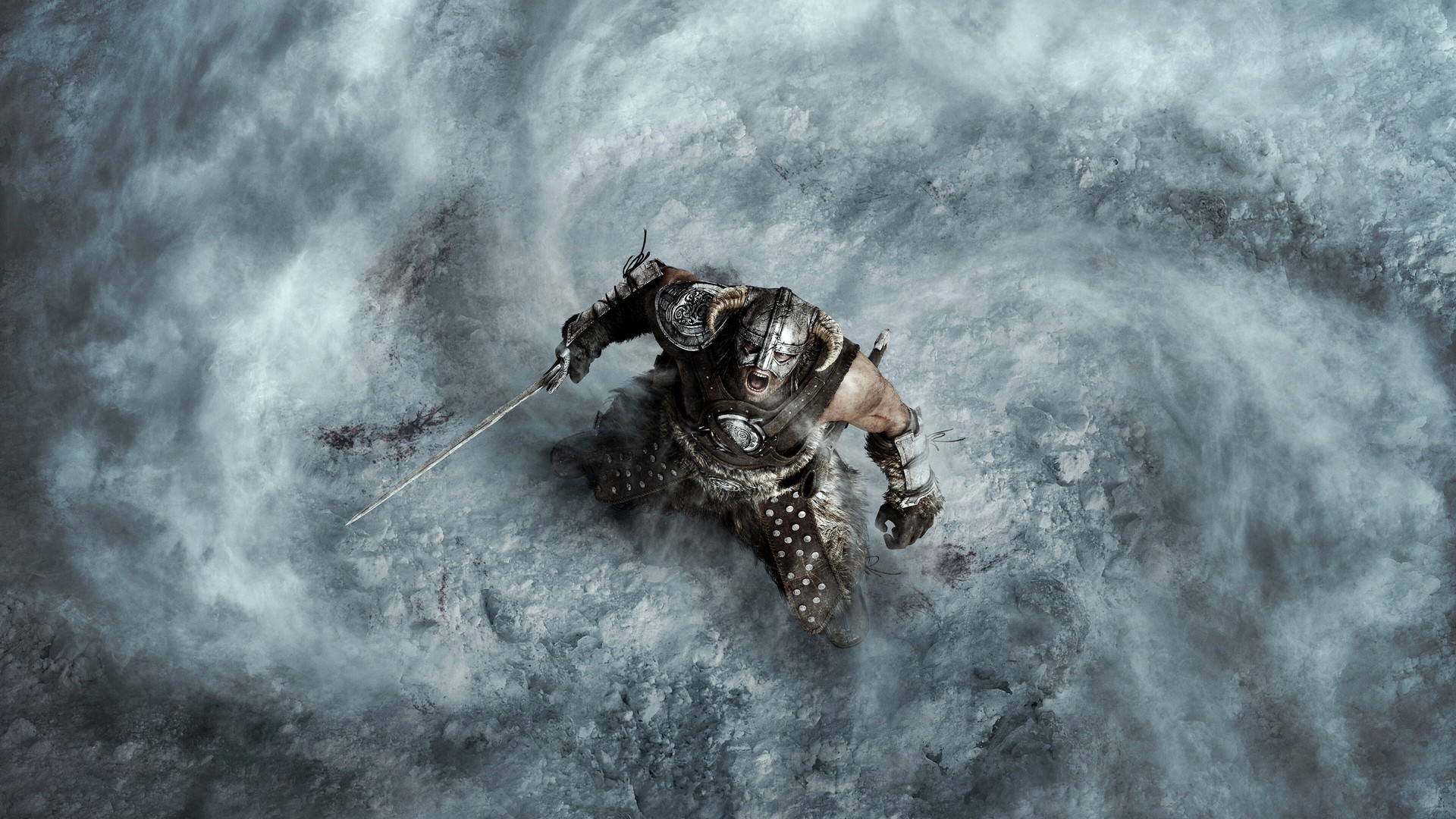
Fifteen years later, it would be dishonest to speak of Skyrim as a flawless work. Its combat system can feel simplistic, shallow, and rather clunky; some animations have aged poorly, and certain activities end up becoming repetitive. Even the main narrative, while featuring memorable moments, does not always reach the heights of its side stories.
Yet, these limitations do not diminish what the game achieves better than so many others: creating a place to which we long to return.
Its longevity has been bolstered by mods, re-releases, and a community that continues to discover new ways to explore Tamriel. But to attribute all of this solely to the ability to modify the game would be to miss the point.
Mods can add content, enhance graphics, and refresh certain mechanics. However, they cannot, on their own, explain why so many people remain attached to Skyrim—why a specific melody can evoke such vivid memories, or why a simple walk through the mountains can prove more fulfilling than far more spectacular activities.
Technology ages, animations become dated, and game systems are eventually surpassed. Atmosphere, by contrast, can retain its power entirely intact.
Skyrim possesses an identity so distinct that a single glimpse of its world—or just a few notes from its soundtrack—is enough to know, instantly, exactly where we are. This is a rare quality, and perhaps it is precisely why the game continues to stand out within a gaming landscape that is constantly evolving.
For me, Skyrim will always be a place to return to.
At this point, I could go on listing the merits of Skyrim—talking about its settings, its quests, the freedom it offers, or its soundtrack. But I believe the reason I consider it such a special game is, ultimately, much simpler.
Skyrim makes me feel at home.
It’s a feeling that doesn’t stem solely from nostalgia, nor from the number of hours I’ve spent playing it. It’s the pleasure of returning to a familiar world, recognizing a landscape, listening to a melody I know by heart, and knowing that—even without a specific objective—I can still find something worth experiencing.
There are other video games that have moved me more deeply in terms of narrative, featuring well-written characters I’ve grown attached to, or adventures defined by unforgettable moments. Yet, Skyrim holds a unique place for me because I don’t feel the need to approach it as a game that must be "finished"; sometimes, I simply want to *be* there.
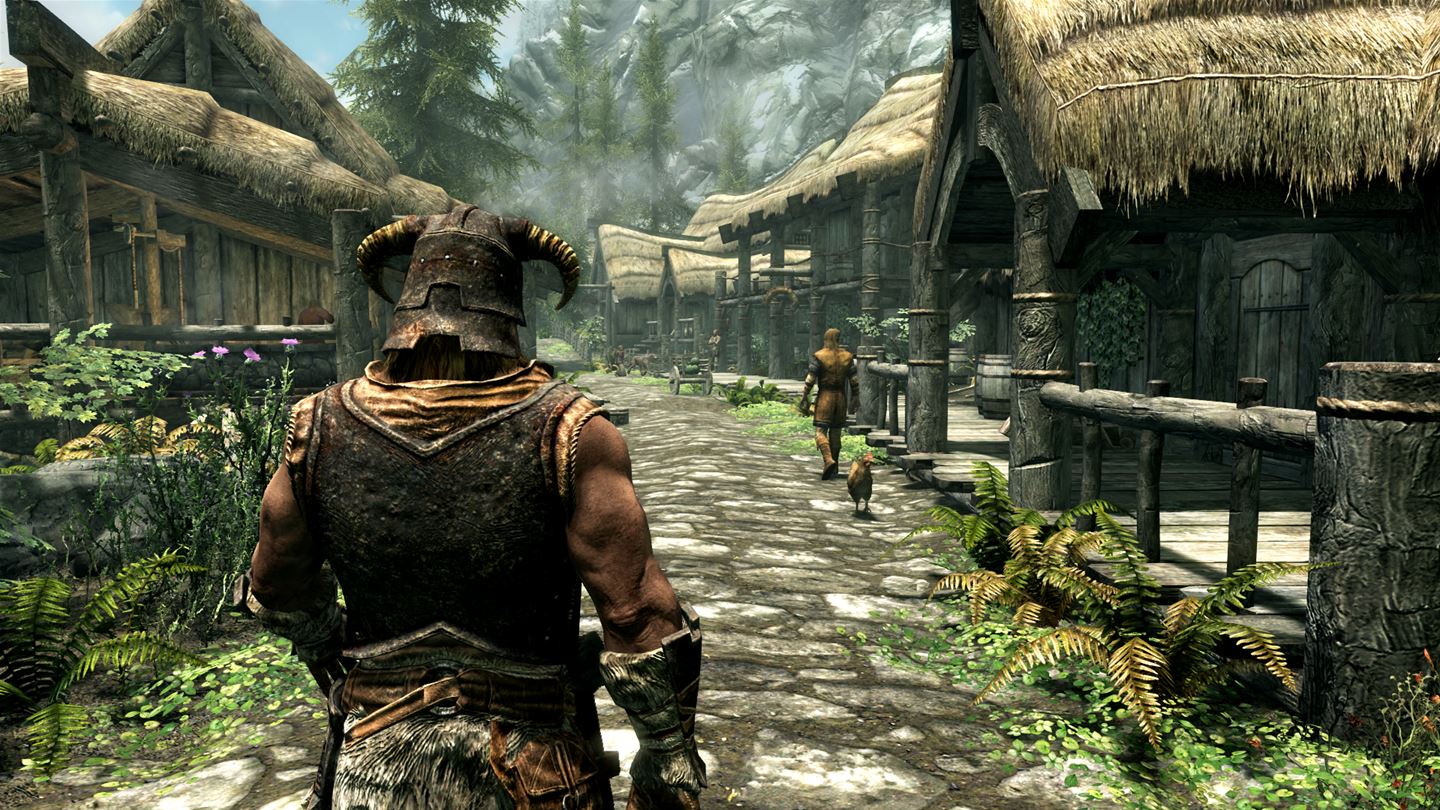
I want to travel its roads, get lost in the mountains, step into an inn, and let the world itself decide what happens next. I want to listen to "Far Horizons" while gazing out at the landscape, and—if only for a few minutes—experience that sense of tranquility which few other games have ever managed to evoke.
Perhaps this is why Skyrim remains so beloved, even by those who have played it dozens and dozens of times. Not everyone looks for the same things in a video game, but Skyrim offers something that transcends the mere sum of its mechanics: the chance to feel like you truly belong to a place.
Skyrim may not be perfect. It might not even be the best role-playing game in every single respect. But some works don’t need to be perfect to become unforgettable.
For me, Skyrim is one of them. And after fifteen years, it remains one of those few virtual places where, every time I return, I have the feeling that I am exactly where I’m supposed to be.
Happy 15th birthday, Skyrim.