
Videogame preservation: what no one talks about
by Cristian Mazzini
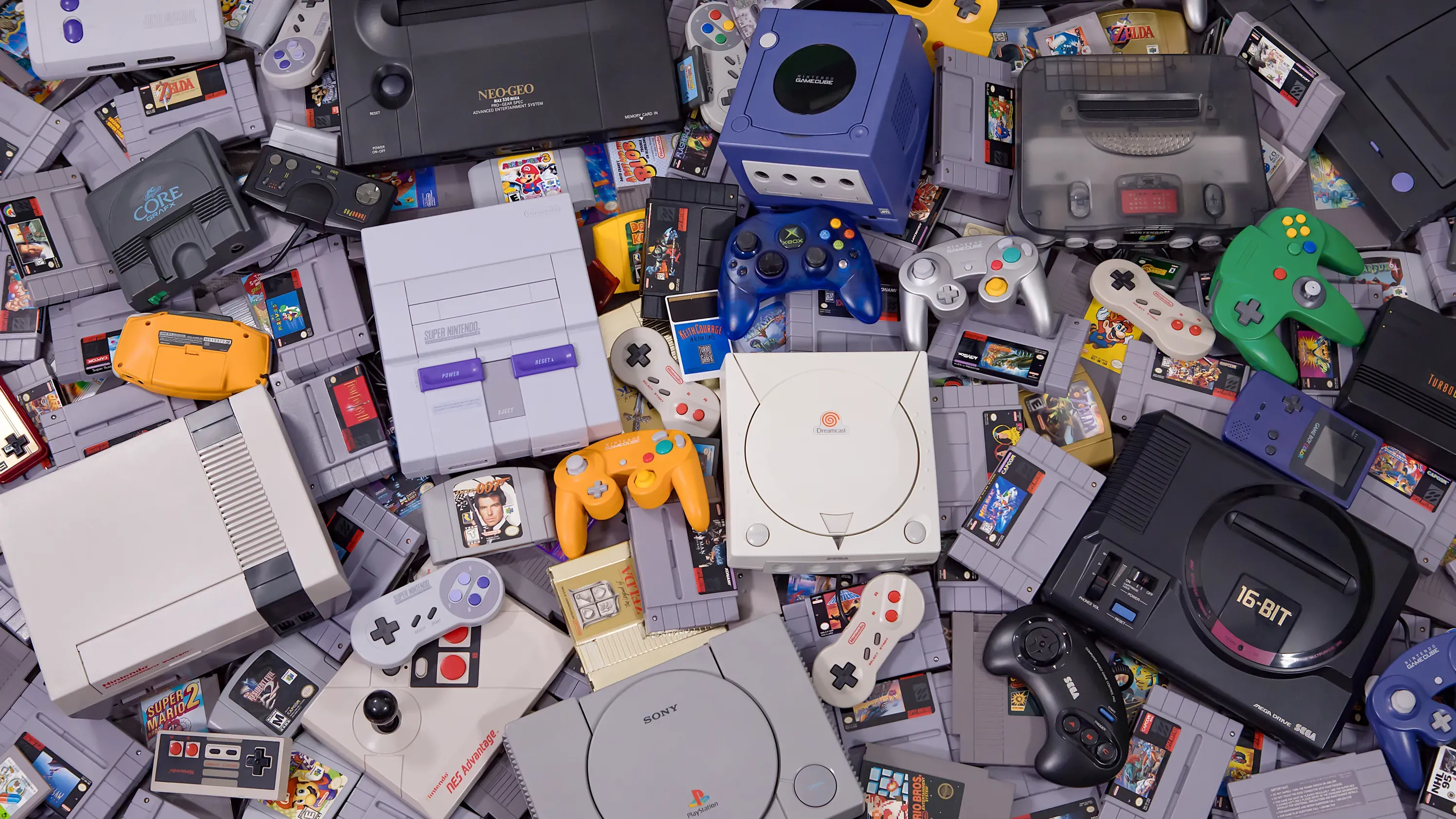
Today I want to talk to you about a topic that has been around for decades—especially on PCs—but that has only recently come to the forefront following PlayStation's drastic decisions.
MY PERSONAL EXPERIENCE
I’ve always been against digital media; I’ve always preferred to collect—and consequently play—various titles exclusively in physical format, and if they weren’t available that way, I simply wouldn’t buy them.
To many, this might seem like an overreaction, but for me it’s always been a matter of principle. I wanted to be protected as a consumer, but above all as a collector and enthusiast of the medium.
For some time now, I’d resigned myself to the fact that fewer and fewer games were being released on physical media, and the ones that were released were sold at outrageous prices. Above all, in almost all cases, they didn’t contain the entire game data but only a small portion—the rest had to be downloaded via the internet, making it virtually pointless to own those copies for collecting or simply for preservation.
I decided to switch to PC 100% starting in mid-June—so very recently—and built myself a truly powerful PC with an NVIDIA RTX 5080, Ryzen 7 9800X3D, and 32GB of RAM. In short, I wanted to be able to play every game without any technical or graphical compromises.
On the one hand, I’d lost the physical format and my collection (which were pretty much useless anyway), but on the other hand, I gained more peace of mind because I no longer had to constantly worry about whether this or that title was available on physical media, whether it would be released physically, or whether it was all on the hard drive or not… at this point, I just didn’t care anymore.
So I started building my own digital “collection” on Steam. (The whole “collection” thing is just too strong for me, haha.)
I started repurchasing my favorite games and those on deep discount, even stocking up on a lot of junk just to pad the numbers, while I picked up all the games released afterward right there—in short, I retired my PS5.
As if on cue, a week later, Sony announced that starting in January 2028, they’ll stop producing physical games for their consoles. My immediate thought was: “Great, so I made the right choice—what a coincidence,” but shortly after the announcement, as you might imagine, all hell broke loose on social media.
People started insulting Sony under every post; the company remained silent, issuing no official statement; and the first discussions began on the topic we’re discussing today: VIDEO GAME PRESERVATION.

THE REAL PROBLEM WITH DIGITAL MEDIA
I’m not going to stand here and give you the same old, tired speech about the problem digital media poses for the future preservation of video games—and beyond—or about the “STOP DESTROYING VIDEOGAMES” initiative or anything else, because the internet is already full of videos and content on the subject.
What I want to talk about instead is something that, as I’ve been researching, I’ve heard almost no one discuss or complain about.
Even though PC games haven’t come in physical form for 20 years, let’s not forget that—despite the fact that every time we buy a game, we don’t actually own it but rather “rent” the license to use it—there’s also an issue related to third-party launchers from various software companies, their third-party accounts, and anti-piracy DRM, which is now present in nearly all AAA titles.
Companies like Rockstar Games, Ubisoft, and EA—to name just a few of the most famous—use third-party launchers. This means that the games we buy on platforms like Steam or Epic Games are tied to a third-party account. If, in 10 years, one of these software companies were to go bankrupt or simply shut down for reason X or Y, without patches to remove them (which they aren’t obligated to provide, since there are currently no laws protecting end consumers), we would lose nearly all of their titles.
Clearly, we’re talking about absurd hypothetical scenarios, because I think the probability that, say, Rockstar Games could shut down or go bankrupt is practically zero—pre-orders for GTA VI alone number in the millions and it’s the most anticipated game in history. So the issue isn’t a practical one but rather yet another confirmation that we own nothing and that our digital library could be taken away from us overnight.
Obviously, it’s not in the companies’ best interest—they’d alienate all their customers—and in any case, there will always be someone who, through modding or piracy, will manage to get these games back onto these systems. But that doesn’t change the fact that it’s very sad that, in a hypothetical future, a person might have to resort to illegal means to play a game they’ve legally purchased with their own money.
Microsoft itself requires a mandatory email address to play its games; without it, the game won’t even launch.
Paradoxically, the “minor” problem is anti-piracy DRM (such as Denuvo), since it’s often implemented only for an initial period after release; or even if it remains, should the game for any reason no longer be supported by the software company in question, it would be possible to remove it or add an offline mode via a patch.
This issue stems from the previous case involving *The Crew 2* due to Ubisoft; they even removed the keys from users’ digital libraries. This controversy, which had died down somewhat, has resurfaced following recent events.
IN CONCLUSION
In conclusion, I believe that worrying about something before it even happens is counterproductive to our mental health. In my own small way, I always try to buy games that don’t require launchers or third-party accounts; as for DRM, I’ve already given up on it and am (optimistically) placing my trust in the goodwill of companies should such a situation arise in the future. (I know, I’m delusional.)
Alternatively, there are services like GOG that offer games at reasonable prices and without DRM, but as for companies that use launchers or secondary accounts, there’s very little we can do. We can hope in the power of the consumer—who can limit purchases as a form of protest—though I don’t have much faith in that, or in potential future patches, potential laws that will protect consumers, and, in the worst-case scenario, piracy.
I hope this reflection has been helpful in better understanding the situation we find ourselves in today and my personal perspective. I certainly don’t consider myself an expert, but I am definitely someone who cares deeply about this topic and is deeply affected by it. Thanks for reading this far—see you next time.